
پاکستان کی آزادی اور تعمیرِ وطن میں ہمارا کردار
A 26-page civic and religious discourse by Mufti Abdul Rehman Munir addressing the Islamic duty of nation-building. Sourced from the historical context of Pakistan's independence on the 27th night of Ramadan, the author emphasizes that homeland is a sacred trust (Amanah). He calls upon citizens to rise above cynical negativity, practice professional honesty, distinguish between government flaws and love for the country, and embody true Islamic patriotism.
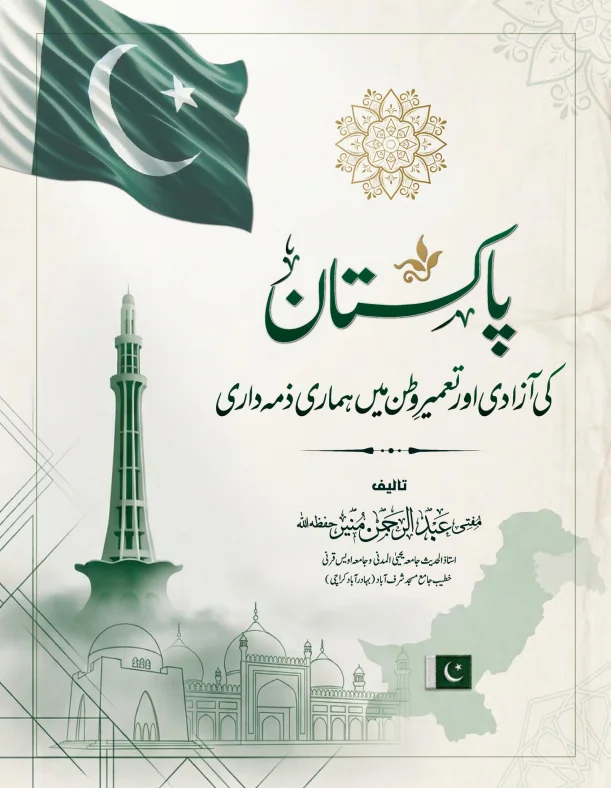
Why This Book Was Written
In the author foreword (Harf-e-Aaghaz), Mufti Abdul Rehman Munir reflects upon the blessing of independence. Pakistan was established upon the sacred ideological foundation of the Kalimah Tayyibah (La ilaha illallah) on the blessed 27th night of Ramadan 1366 AH, after staggering human sacrifices.
The author addresses the widespread disease of cynical despair in contemporary society, where citizens constantly criticize the country yet fail to fulfill their own basic professional, civic, and moral responsibilities. Loving one's homeland (Hubb-ul-Watan) is a noble prophetic Sunnah demonstrated by the Prophet Muhammad ﷺ when weeping over Makkah.
This treatise guides readers to differentiate clearly between transient systemic administrative flaws and sacred love for the homeland, urging every professional, worker, teacher, and student to contribute constructively to building an honest, harmonious, and prosperous society.
“Homeland is a sacred trust purchased with the blood and tears of our ancestors. Criticizing the system while neglecting one's own integrity builds nothing. True patriotism is fulfilling your daily duty with excellence, honesty, and fear of Allah.”
Core Insights From the Book
Guiding Islamic principles on civic responsibility and nation-building.
Homeland is a Sacred Trust (Amanah)
Freedom is an invaluable divine gift. Living in a sovereign state where the Adhan echoes freely demands gratitude, responsibility, and protection.
The Ideological Foundation of Pakistan
Pakistan was achieved on the distinct spiritual premise of Islamic monotheism (Kalimah), requiring that its laws, justice, and social ethics reflect Islamic ideals.
Overcoming Cynical Negativity with Action
Constant despair and idle complaining erode collective morale. Every individual must replace complaining with constructive, productive contributions in their field.
Four Pillars of an Exemplary Society
The author outlines justice, honest enterprise, moral education, and mutual compassion as the indispensable pillars for social stability and progress.
Love of Homeland is a Prophetic Sunnah
When leaving Makkah, the Prophet ﷺ expressed heartfelt love for his native land; genuine patriotism is an organic manifestation of living faith.
Professional Honesty as Nation-Building
A doctor diagnosing sincerely, a teacher educating dedicatedly, a merchant dealing honestly, and an officer serving fairly is where nation-building truly happens.
Distinguishing System Flaws from the Country
Disappointment with governance or political leadership must never translate into hatred or hostility toward the homeland itself.
Tolerance and Balanced Disagreement
A healthy society respects differences of opinion without descending into polarization, sectarian hostility, or violence.
Table of Contents (فہرستِ عنوانات)
Complete 14-topic Table of Contents as recorded in the book's index on pages 3 and 4.
Khutba Masnoonah
Harf-e-Aaghaz (Author Foreword)
Homeland: A Sacred Divine Trust
Foundation of the Kalimah & Stability of State
Negative Cynicism & Lack of Constructive Action
Four Foundational Pillars of an Ideal Society
Continuous Worship & Avoiding Imitation of Outsiders
Love of Country: A Prophetic Sunnah & Faith Duty
Prayer of Ibrahim (AS) & Homeland Stability
Individual Responsibility in Nation Building
Cherishing Freedom Purchased with Blood and Tears
Nation Building & Demand for Professional Integrity
Do Not Show Ingratitude for Peace and Security!
Differentiating Systemic Flaws from Patriotism
Read the Complete Book
You can read all 26 pages right here in your browser, or download the original PDF file below.

More Books by Mufti Abdul Rehman Munir
Explore other authored books on Islamic character, gratitude, and prophetic guidance.
Dua: Bandah Aur Rab Ke Darmiyan Ta'alluq Ka Zariya
A concise and profound guide to understanding the true essence of Dua. This book highlights the qualities of sincere sup...
Shukr-e-Khudawandi: Haqeeqat, Tareeqe Aur Fawaid
A comprehensive 45-page spiritual guide exploring the essence of gratitude (Shukr) to Allah. Mufti Abdul Rehman Munir ex...
Chand Nasaih-e-Payambari: Hazrat Abdullah Bin Abbas (RA) Ke Liye
An authentic exposition of the famous Hadith in Jami at-Tirmidhi where Prophet Muhammad ﷺ counseled his young cousin Abd...
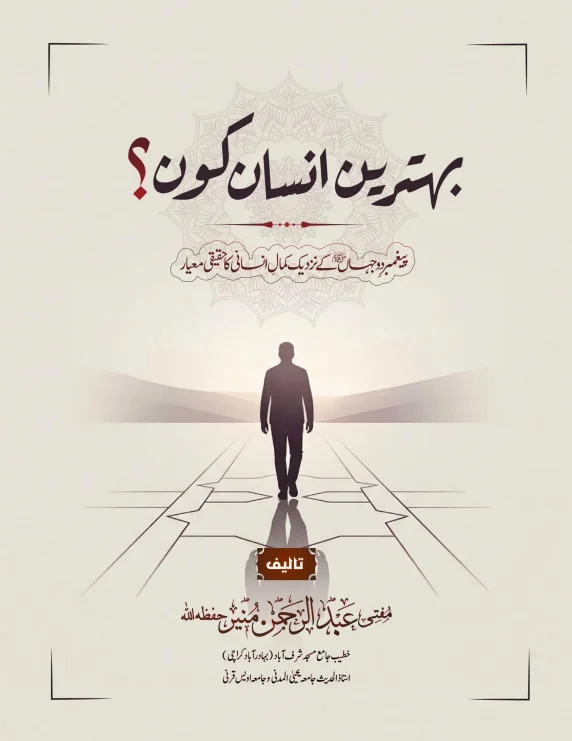
Behtareen Insaan Kon? Zubaan-e-Nubuwwat Se Rahnumai
Who is truly the best human being? While society measures greatness by wealth, pedigree, or worldly power, the Prophet M...
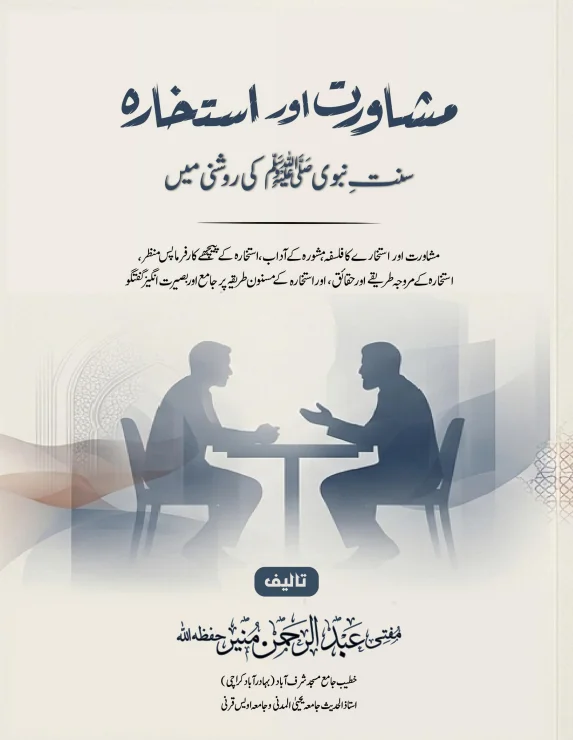
Bahami Mushawarat Aur Istikhara Ke Fawaid Aur Tareeqa
A 30-page practical treatise illuminating the two essential pillars of sound Islamic decision-making: mutual consultatio...
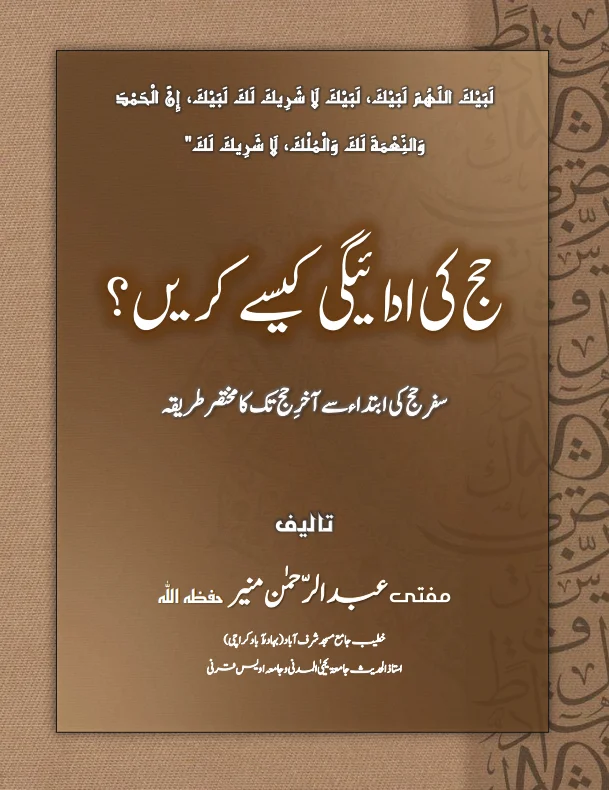
Hajj Ki Adaigi Kaise Karein?
A detailed 61-page practical pilgrims' handbook by Mufti Abdul Rehman Munir. Originating from intensive educational work...
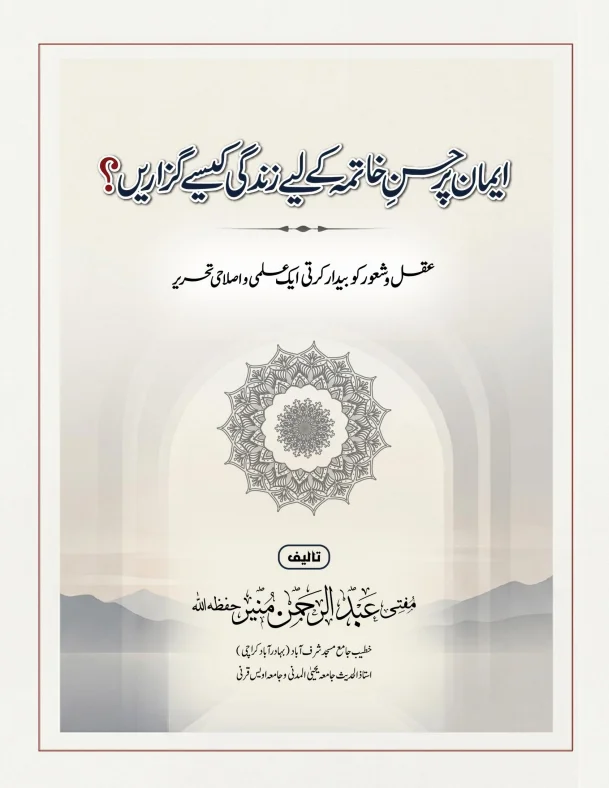
Husn-e-Khatima Ke Liye Zindagi Kaise Guzarein
A deeply stirring 25-page spiritual admonition on how to prepare for a blessed departure from this world with Iman intac...
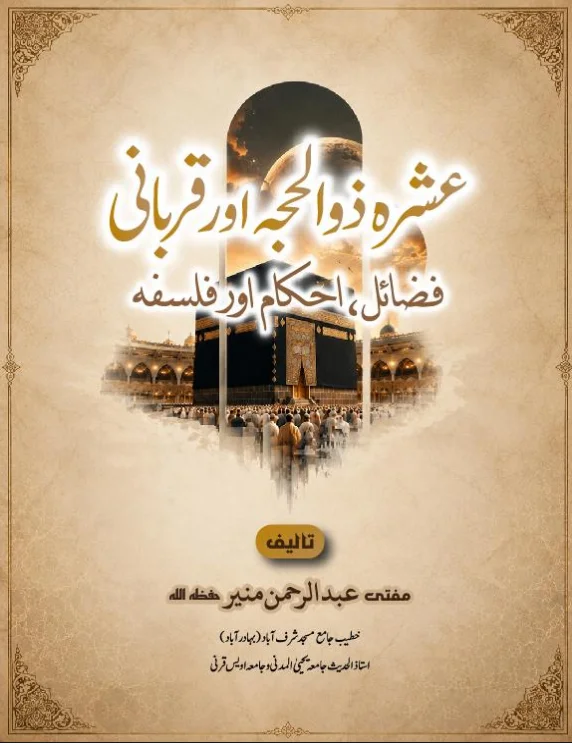
Ashra-e-Zilhajj Aur Qurbani: Fazail, Masail Wa Falsafa
A comprehensive 44-page Fiqh and spiritual compendium by Mufti Abdul Rehman Munir. It details the supreme virtues of the...
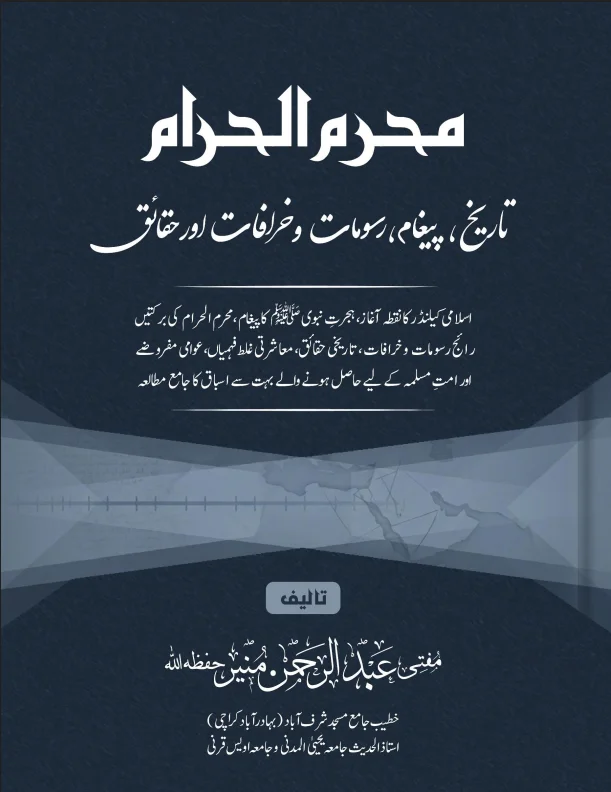
Mah-e-Muharram-ul-Haraam: Taareekh, Paighaam, Bidaat Wa Rasoomat
A 26-page scholarly work by Mufti Abdul Rehman Munir addressing the sanctity and historical realities of Muharram. The a...